mirror of
https://github.com/antonblanchard/microwatt.git
synced 2026-05-16 20:05:24 +00:00
 db937403ec
A first pass at ghdl synthesis using yosys and nextpnr. It runs hello world
or micropython if the FPGA has enough block RAM (eg ECP5 85F). The hello
world testcase also loops UART rx to tx in software (ie not a hardware
loopback).

It uses Docker images, so no software needs to be installed. If you prefer
podman you can use that too. Edit Makefile.synth to configure your FPGA,
JTAG device etc.

To build:

make -f Makefile.synth

and to program:

make -f Makefile.synth prog

A few issues:

We need to add PLL support. Right now Microwatt runs at whatever the
external clock frequency is and the baud rate gets scaled by how far off
50MHz it is. This means on the ecp5-evn with a 12 MHz clock rate the baud
rate is a quite strange 27650 (115200 * 50 / 12). On my OrangeCrab with a
50MHz clock the UART is 115200.

It uses a large amount of resources, way more than it should. There are
still some ghdl/yosys issues to be sorted out.

Signed-off-by: Anton Blanchard <anton@linux.ibm.com>

Microwatt
A tiny Open POWER ISA softcore written in VHDL 2008. It aims to be simple and easy to understand.
Simulation using ghdl
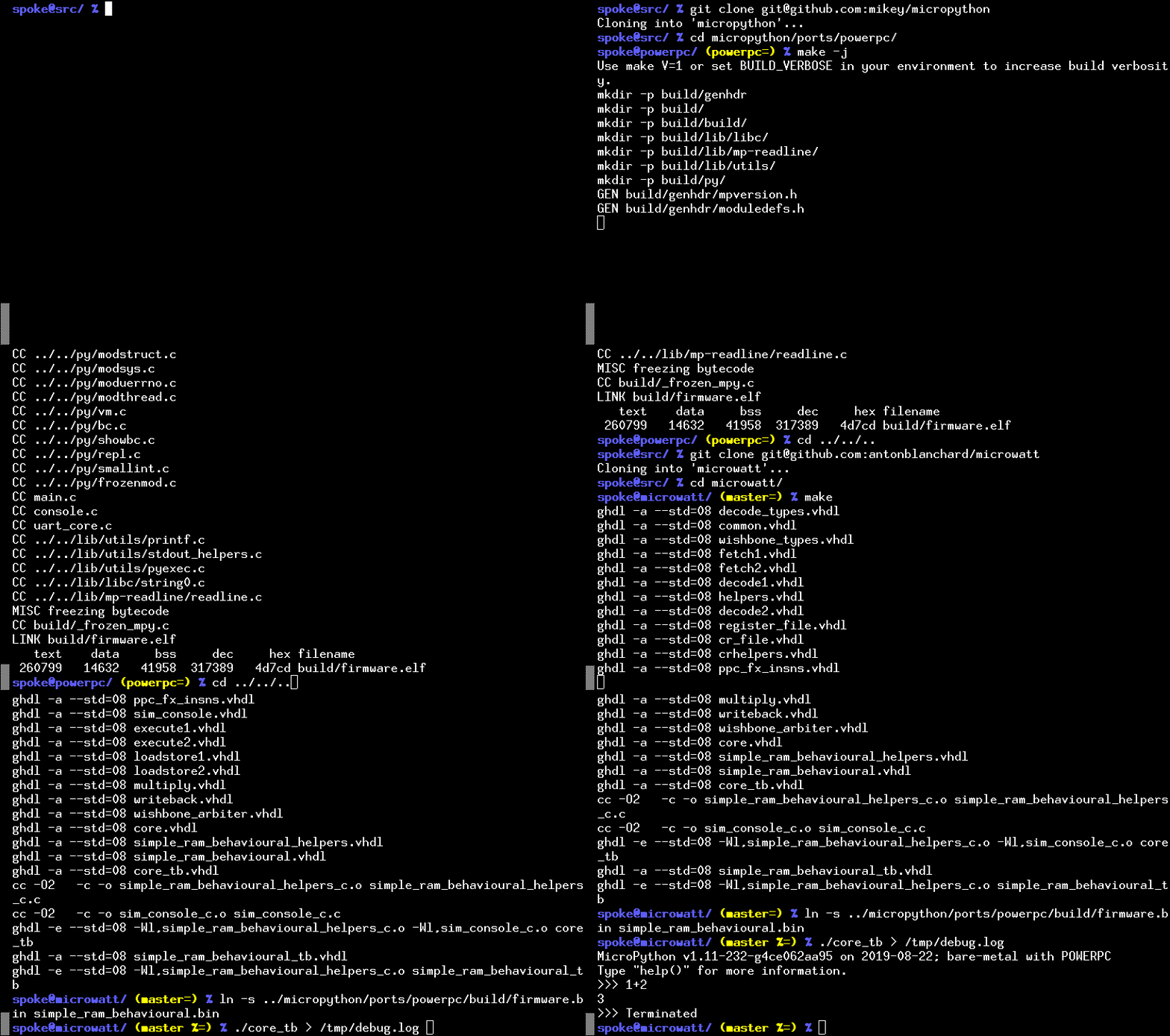
You can try out Microwatt/Micropython without hardware by using the ghdl simulator. If you want to build directly for a hardware target board, see below.
- Build micropython. If you aren't building on a ppc64le box you will need a cross compiler. If it isn't available on your distro grab the powerpc64le-power8 toolchain from https://toolchains.bootlin.com
git clone https://github.com/micropython/micropython.git
cd micropython
cd ports/powerpc
make -j$(nproc)
cd ../../../
- Microwatt uses ghdl for simulation. Either install this from your distro or build it. Next build microwatt:
git clone https://github.com/antonblanchard/microwatt
cd microwatt
make
- Link in the micropython image:
ln -s ../micropython/ports/powerpc/build/firmware.bin main_ram.bin
- Now run microwatt, sending debug output to /dev/null:
./core_tb > /dev/null
Synthesis on Xilinx FPGAs using Vivado
-
Install Vivado (I'm using the free 2019.1 webpack edition).
-
Setup Vivado paths:
source /opt/Xilinx/Vivado/2019.1/settings64.sh
- Install FuseSoC:
pip3 install --user -U fusesoc
Fedora users can get FuseSoC package via
sudo dnf copr enable sharkcz/danny
sudo dnf install fusesoc
- Create a working directory and point FuseSoC at microwatt:
mkdir microwatt-fusesoc
cd microwatt-fusesoc
fusesoc library add microwatt /path/to/microwatt/
- Build using FuseSoC. For hello world (Replace nexys_video with your FPGA board such as --target=arty_a7-100):
fusesoc run --target=nexys_video microwatt --memory_size=8192 --ram_init_file=/path/to/microwatt/fpga/hello_world.hex
You should then be able to see output via the serial port of the board (/dev/ttyUSB1, 115200 for example assuming standard clock speeds). There is a know bug where initial output may not be sent - try the reset (not programming button on your board if you don't see anything.
- To build micropython (currently requires 1MB of BRAM eg an Artix-7 A200):
fusesoc run --target=nexys_video microwatt
Testing
- A simple test suite containing random execution test cases and a couple of micropython test cases can be run with:
make -j$(nproc) check
Issues
This is functional, but very simple. We still have quite a lot to do:
- There are a few instructions still to be implemented
- Need to add caches and bypassing (in progress)
- Need to add supervisor state (in progress)